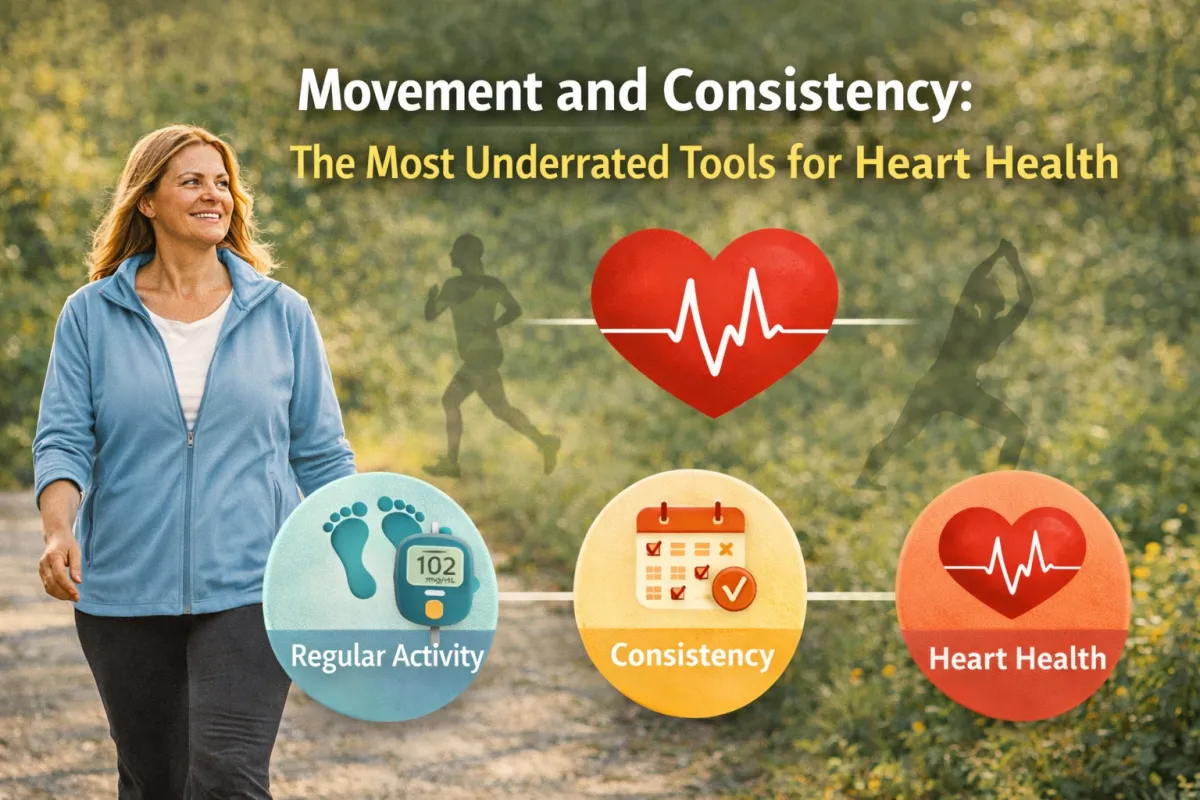
Movement and Consistency in Heart Health
Movement and Consistency: The Most Underrated Tools for Heart Health
By the time people reach the end of Heart Health Month, many feel pressure to “do more.”
More exercise.
More discipline.
More changes.
But heart health is not built on intensity.
It’s built on consistency.
For most people, the biggest gains in heart health come from regular, moderate movement practiced over time, not extreme workouts or short bursts of motivation.
Why Movement Matters for the Heart
Movement supports heart health in several important ways:
improves insulin sensitivity
lowers blood pressure
improves cholesterol patterns
reduces inflammation
improves blood vessel function
Even small amounts of daily movement improve cardiovascular risk markers.
You don’t need to exercise perfectly for your heart to benefit — you just need to move consistently.
The Power of Moderate, Regular Activity
Research consistently shows thatmoderate physical activity, such as walking, provides significant heart protection.
Examples include:
walking after meals
light strength training
stretching or mobility work
standing and moving throughout the day
activities you enjoy and will repeat
The heart responds best to frequent signals of movement, not occasional intensity.
Why Consistency Beats Intensity
Intense exercise can be helpful for some people, but it is not required — and for many, it’s not sustainable.
Consistency:
improves metabolic flexibility
supports steady blood sugar
reduces stress hormones
lowers cardiovascular risk over time
Doing something small most days is far more effective than doing something hard once in a while.
Movement and Blood Sugar Go Hand in Hand
Movement is one of the most effective tools for improving blood sugar control.
Even short bouts of activity:
help muscles absorb glucose without insulin
reduce post-meal blood sugar spikes
improve insulin sensitivity
This is one reason movement is strongly recommended for people with diabetes, prediabetes, and insulin resistance.
What “Enough” Movement Looks Like
Heart health does not require perfection.
A realistic approach might include:
walking most days
moving after meals when possible
breaking up long periods of sitting
choosing activities that feel doable
The best plan is the one you’ll still be doing months from now.
The Long-Term View of Heart Health
Heart disease develops over years, not weeks.
That means heart protection also happens gradually:
through daily habits
repeated choices
consistent routines
When movement becomes part of your lifestyle — not a temporary goal — heart health improves naturally.
The Takeaway
You don’t need to overhaul your life to protect your heart.
You need:
regular movement
realistic expectations
consistency over intensity
Small steps, repeated often, are powerful medicine for the heart.
References (Evidence-Based)
American Heart Association.Physical Activity and Heart Health.
https://www.heart.orgADA Standards of Care in Diabetes—2024.
Physical activity and glycemic management.
https://diabetesjournals.orgWarburton DER, Nicol CW, Bredin SSD.
Health benefits of physical activity.
CMAJ, 2006.Booth FW et al.
Lack of exercise is a major cause of chronic diseases.
Comprehensive Physiology, 2012.Colberg SR et al.
Exercise and Type 2 Diabetes.
Diabetes Care, 2016.
