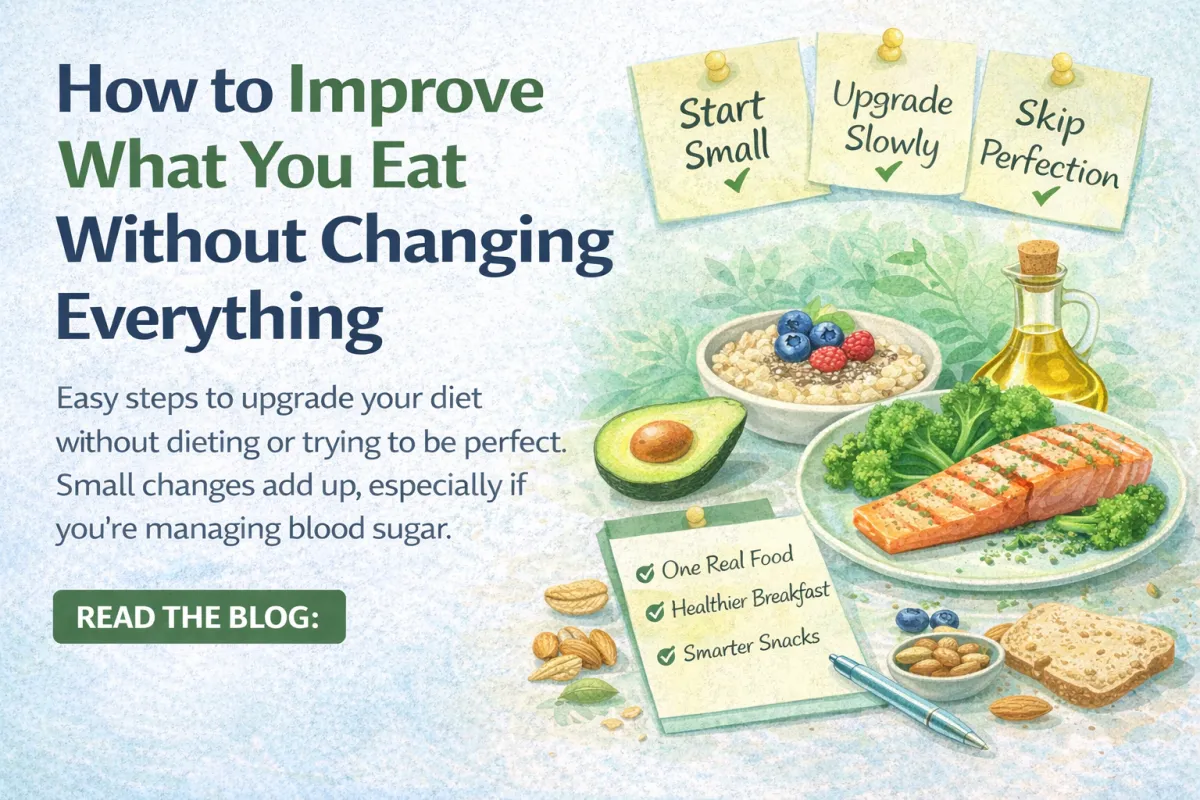
How to Improve What You Eat
How to Improve What You Eat Without Changing Everything
If you have diabetes, insulin resistance, high blood pressure, or you’re trying to lose weight, you’ve probably been told to “eat healthier.”
But what does that even mean?
For many people, “eat healthier” sounds like:
Throw away everything in your kitchen
Stop eating your favorite foods
Cook every meal from scratch
Never eat out again
Follow a strict diet forever
And honestly… that’s why so many people give up.
Here’s the good news: You do not have to change everything to improve what you eat.
Small changes—done consistently—can lead to big results over time.
In this post, I’ll show you simple, realistic ways to improve your meals without feeling overwhelmed.
Why Small Changes Work Better Than Big Changes
Most people don’t fail because they don’t care. They fail because the plan is too extreme.
When you try to change everything at once, your brain sees it as a threat. It feels like too much work, too much stress, and too much pressure. That’s when you start thinking:
“I can’t do this.”
“I already messed up.”
“I’ll start over Monday.”
Instead, research shows that small habits are easier to stick with, and they build confidence over time. Once a small change becomes your new normal, you can add another one.
Progress happens faster when your plan is realistic.
Step 1: Add One “Real Food” to Every Meal
You don’t have to remove all your favorite foods right away.
Start with one simple goal:
✅ Add one real food to every meal.
Real foods are foods that are close to how they grow in nature. Examples include:
Vegetables
Fruit
Beans and lentils
Nuts and seeds
Eggs
Fish or chicken
Plain yogurt
Oats
Brown rice or quinoa
Even adding one real food can help:
increase fiber
improve fullness
reduce cravings
support blood sugar balance
Easy examples:
Add berries to your breakfast
Add a side salad to lunch
Add roasted veggies to dinner
Add a handful of nuts as a snack
Step 2: Upgrade Your Breakfast (Without Making It Fancy)
Breakfast is a great place to start because it can affect your energy, cravings, and blood sugar for the whole day.
A breakfast that is mostly carbs (like cereal, toast, muffins, or pastries) may cause blood sugar spikes and crashes.
A better goal is:
✅ Build breakfast with protein + fiber.
Better breakfast ideas:
Greek yogurt + berries + chia seeds
Eggs + veggies + avocado
Oatmeal + chia + cinnamon + nuts (portion-controlled)
Protein smoothie with spinach + berries
You don’t need a perfect breakfast. You just need a better one than yesterday.
Step 3: Use the “Half-Plate Veggie” Trick
Vegetables are one of the best foods for blood sugar and long-term health.
They are high in:
fiber
antioxidants
vitamins and minerals
water (helps fullness)
Try this simple method at lunch or dinner:
✅ Fill half your plate with non-starchy vegetables.
Non-starchy veggies include:
broccoli
spinach
salad greens
peppers
zucchini
cauliflower
asparagus
green beans
mushrooms
This is one of the easiest ways to reduce carbs naturally without feeling restricted.
Step 4: Swap Sugary Drinks First (This Is a Big Win)
If you want one change that can make a huge difference fast, it’s this:
✅ Cut back on sugary drinks.
Sugary drinks raise blood sugar quickly and do not keep you full. This includes:
soda
sweet tea
juice
sports drinks
sweet coffee drinks
Better options:
water
sparkling water
unsweetened iced tea
black coffee or coffee with a splash of milk
flavored water with lemon or cucumber
This one change can improve blood sugar and reduce calories without changing your meals.
Step 5: Improve Your Snacks
Many people snack because they’re tired, stressed, or hungry between meals. Snacks aren’t bad. The goal is to choose snacks that support stable energy.
A “blood sugar-friendly” snack usually includes:
✅ protein + fiber or healthy fat
Better snack ideas:
apple + peanut butter
cheese + nuts
hummus + carrots
hard-boiled eggs
Greek yogurt
roasted chickpeas
These snacks help prevent blood sugar spikes and keep you full longer.
Step 6: Stop Trying to Be Perfect
One of the biggest reasons people struggle is because they think they have to do it perfectly.
But health isn’t about perfection.
It’s about patterns.
If you eat one healthy meal, that helps.
If you eat one unhealthy meal, that doesn’t ruin you.
The goal is not:
❌ “Never eat sugar again.”
The goal is:
✅ “Make better choices most of the time.”
That’s how real change happens.
Step 7: Make One Simple “Food Rule” You Can Actually Follow
Instead of trying to follow a complicated diet, try one small rule that fits your life.
Here are a few examples:
“I will eat a vegetable at lunch and dinner.”
“I will drink water before coffee.”
“I will eat protein at breakfast.”
“I will stop eating after 8 PM most nights.”
“I will plan 2 easy dinners each week.”
Pick ONE. Stick with it for 2 weeks. Then add another.
What This Means for People With Diabetes
If you have diabetes or insulin resistance, small changes matter even more.
These small upgrades can help:
lower blood sugar spikes after meals
improve insulin sensitivity
reduce cravings
support weight loss
lower A1C over time
You don’t need extreme diets to improve diabetes outcomes. You need consistent habits that support your body every day.
A Simple Weekly Plan (Try This)
If you want to keep it easy, try this:
Week 1: Add one vegetable daily
Week 2: Add protein to breakfast
Week 3: Swap sugary drinks for water
Week 4: Upgrade snacks
This plan is gentle, realistic, and sustainable.
Final Thoughts
Improving what you eat does not mean changing your entire life.
It means:
adding more real foods
building simple balanced meals
making small upgrades
staying consistent
You can start today with one change.
And one change can lead to the next.
That’s how you build real health.
References
American Diabetes Association (ADA). Nutrition and Healthy Eating for Diabetes
https://diabetes.org/food-nutritionCenters for Disease Control and Prevention (CDC). Healthy Eating for a Healthy Weight
https://www.cdc.gov/healthyweight/healthy_eating/Harvard T.H. Chan School of Public Health. The Healthy Eating Plate
https://www.hsph.harvard.edu/nutritionsource/healthy-eating-plate/Dietary Guidelines for Americans (USDA/HHS). Make Every Bite Count
https://www.dietaryguidelines.gov/National Institute of Diabetes and Digestive and Kidney Diseases (NIDDK). Diabetes Diet, Eating, & Physical Activity
https://www.niddk.nih.gov/health-information/diabetes/overview/diet-eating-physical-activity
