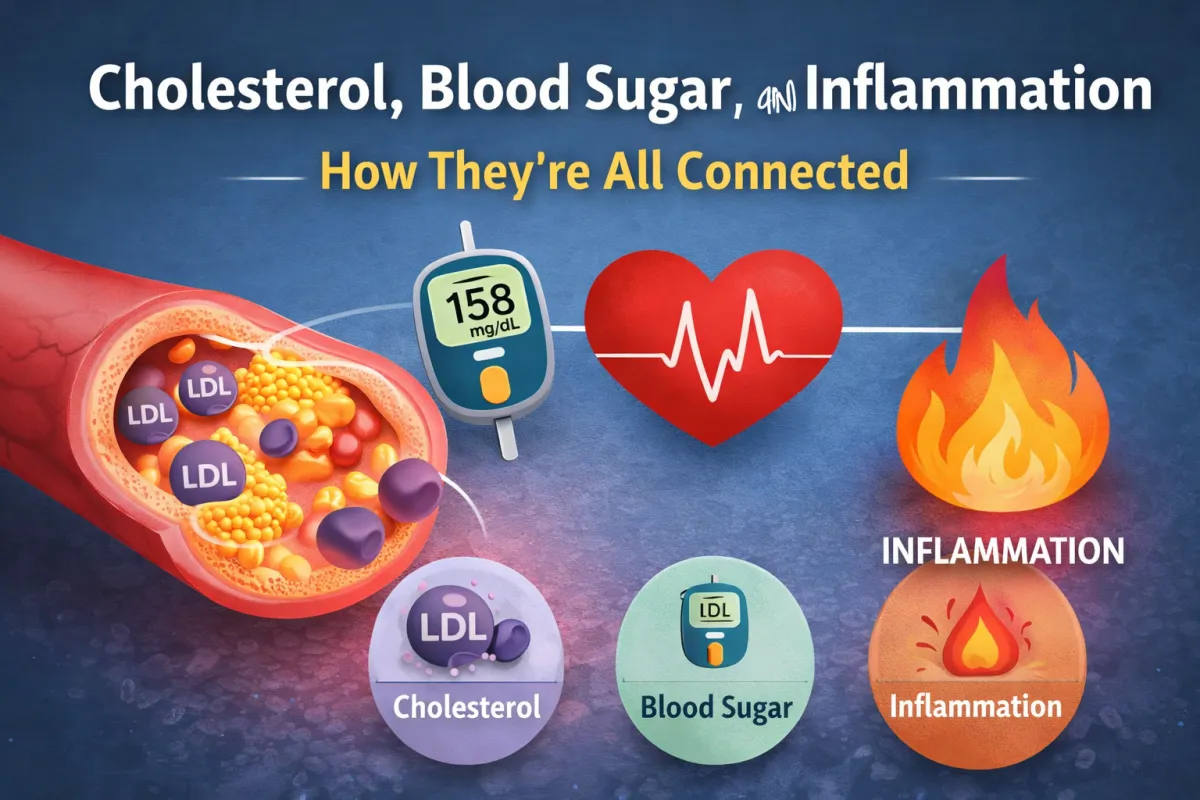
Cholesterol, Blood Sugar, and Inflammation
Cholesterol, Blood Sugar, and Inflammation: How They’re All Connected
When people think about heart health, cholesterol is usually the first thing that comes to mind.
But cholesterol does not act alone.
Blood sugar levels, insulin resistance, and inflammation all influence how cholesterol behaves in the body—and how much risk it poses to the heart.
Understanding this connection helps explain why focusing only on cholesterol numbers often isn’t enough.
Cholesterol Is More Than One Number
Cholesterol is not a single substance. It includes several components, such as:
LDL cholesterol (“bad” cholesterol)
HDL cholesterol (“good” cholesterol)
While LDL cholesterol has long been linked to heart disease, research now shows that how cholesterol particles behave matters just as much as the number itself.
This is where blood sugar and inflammation come in.
How Blood Sugar Affects Cholesterol
When blood sugar stays high over time, it leads to insulin resistance. Insulin resistance changes how the liver processes fats and cholesterol.
This can result in:
higher triglycerides
lower HDL cholesterol
more small, dense LDL particles
Small, dense LDL particles are more likely to penetrate artery walls and contribute to plaque formation than larger LDL particles.
In other words, poor blood sugar control can make cholesterol more harmful, even if LDL levels don’t look extremely high.
The Role of Inflammation
Inflammation plays a key role in heart disease.
damages blood vessel walls
makes it easier for cholesterol to stick to arteries
contributes to plaque instability
High blood sugar, poor sleep, chronic stress, and abdominal fat all increase inflammation.
This is why heart disease is now understood as an inflammatory condition, not just a cholesterol problem.
Why This Matters for People With Diabetes or Prediabetes
People with diabetes are at higher risk for heart disease—not simply because of cholesterol, but because:
blood sugar fluctuations increase oxidative stress
insulin resistance worsens lipid patterns
inflammation accelerates artery damage
Improving blood sugar control often leads to:
better triglyceride levels
improved HDL cholesterol
reduced inflammation
This helps explain why lifestyle changes can improve heart health even before cholesterol medications are adjusted.
Supporting Heart Health Starts With Metabolic Health
You don’t need to overhaul everything to support cholesterol, blood sugar, and inflammation.
Small, consistent habits make a meaningful difference:
eating balanced meals with protein, fiber, and healthy fats
moving regularly, especially after meals
managing stress and improving sleep
reducing ultra-processed foods
focusing on consistency instead of perfection
These actions support the root causes of heart disease—not just the lab values.
The Takeaway
Cholesterol, blood sugar, and inflammation are deeply connected.
Addressing heart health means looking beyond a single number and supporting the body as a whole.
When blood sugar is steadier and inflammation is lower, cholesterol often becomes less dangerous—and heart health improves in a more sustainable way.
References (Real, Evidence-Based)
American Heart Association.Diabetes and Heart Disease.
https://www.heart.orgGrundy SM et al.2018 AHA/ACC Guideline on the Management of Blood Cholesterol.
Journal of the American College of Cardiology, 2019.Reaven GM.Insulin resistance, cardiovascular disease, and the metabolic syndrome.
Diabetes Care, 2005.ADA Standards of Care in Diabetes—2024.
https://diabetesjournals.orgLibby P.Inflammation in Atherosclerosis.
Nature, 2002.
