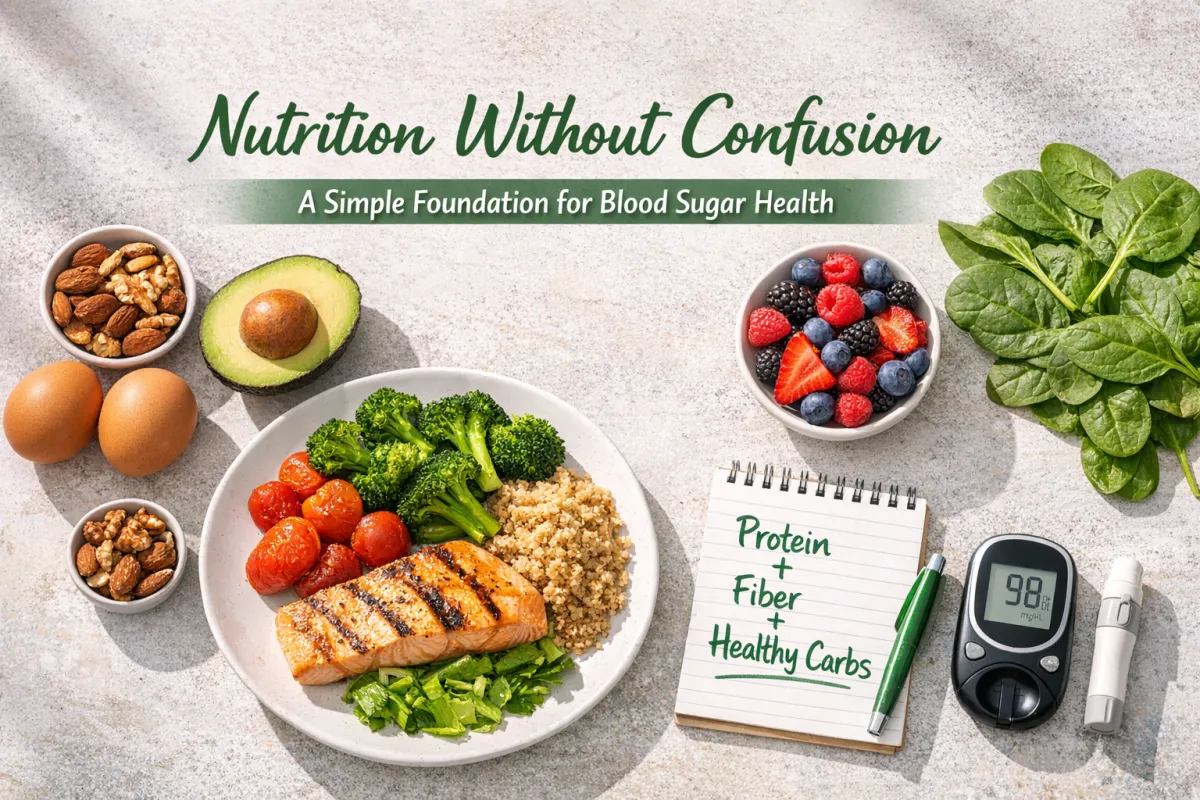
Nutrition Without Confusion
Nutrition Without Confusion: A Simple Foundation for Blood Sugar Health
March is National Nutrition Month.
And if you live with Type 2 diabetes — or are trying to prevent it — you may feel overwhelmed by food advice.
Low carb.
No carb.
Plant-based.
High protein.
Mediterranean.
Keto.
Intermittent fasting.
It can feel like the rules change every week.
If you’ve ever thought,
“I don’t even know what to eat anymore,”
you are not alone.
But here is the truth:
Most people do not need more food rules.
They need a strong foundation.
This month, we are focusing on clarity — not perfection.
Food Is More Than Calories
When most people think about nutrition, they think about calories or weight.
But food does more than affect the scale.
Food sends information to your body.
Every time you eat, your body receives signals:
Raise blood sugar
Lower blood sugar
Release insulin
Store fat
Burn energy
Increase inflammation
Reduce inflammation
For someone living with insulin resistance or diabetes, these signals matter.
That is why two meals with the same calories can affect you very differently.
It is not only about how much you eat.
It is about what the food is telling your body to do.
Why “Eating Healthy” Still Feels Hard
Many of my patients say:
“I’m eating healthy, but my sugars are still high.”
Often, they are eating foods considered “healthy” — like oatmeal, fruit smoothies, whole grain bread, or low-fat snacks.
These foods are not bad.
But for someone with insulin resistance, they can raise blood sugar quickly.
Without understanding how food affects glucose levels, people blame themselves.
They think:
“I must not be trying hard enough.”
But the problem is not willpower.
The problem is confusion.
When you understand how protein, fiber, fats, and carbohydrates work together, the confusion begins to fade.
The Foundation That Actually Matters
You do not need a complicated meal plan.
You need a few simple principles.
1. Prioritize Protein
Protein slows digestion and helps stabilize blood sugar.
It also supports muscle mass, which improves insulin sensitivity.
Good options include:
Eggs
Greek yogurt
Fish
Chicken
Tofu
Beans and lentils
Starting your day with protein instead of only carbohydrates can make a noticeable difference in energy and glucose levels.
2. Add Fiber
Fiber slows the absorption of glucose.
Vegetables, seeds, nuts, and legumes help blunt blood sugar spikes.
Half of your plate from non-starchy vegetables is a simple starting point.
Think:
Broccoli
Spinach
Zucchini
Peppers
Cauliflower
Salad greens
Fiber feeds the gut microbiome as well, which plays a role in inflammation and metabolic health.
3. Reduce Refined Carbohydrates
Refined carbohydrates digest quickly and raise blood sugar fast.
These include:
White bread
Sugary drinks
Pastries
Processed snacks
This does not mean you can never eat carbohydrates.
It means choosing them intentionally and pairing them with protein and fiber.
4. Pay Attention to Timing
Large meals late at night can keep blood sugar elevated overnight.
Late eating can also affect sleep, and poor sleep worsens insulin resistance.
Try:
Finishing your last meal 2–3 hours before bed
Taking a short walk after dinner
Small timing shifts can make a big difference.
5. Stay Hydrated
Dehydration can concentrate blood glucose levels.
Sometimes fatigue or cravings are actually signs of dehydration.
Start the day with water before coffee.
It is simple — and effective.
Nutrition Is Not Just About Food
Blood sugar is influenced by more than what is on your plate.
Stress increases cortisol, which can raise glucose levels.
Lack of sleep increases hunger hormones and worsens insulin resistance.
Lack of movement reduces muscle glucose uptake.
That is why someone can say:
“I’m doing everything right with food, but it’s still not working.”
Nutrition works best when your body feels supported.
And support includes:
Sleep
Stress management
Movement
Mindset
We will explore more of this later in the month.
For now, focus on the foundation.
A Better Question to Ask
Instead of asking:
“What diet should I follow?”
Ask:
“What would support my blood sugar today?”
That might look like:
Adding protein to breakfast
Swapping soda for water
Walking 10 minutes after dinner
Checking your glucose without judgment
These are not dramatic changes.
They are steady changes.
And steady changes create stable results.
You Do Not Need Perfection
You do not need to:
Eliminate every carbohydrate
Count every calorie
Track every gram
Follow a trendy diet
You need clarity and consistency.
Most people do not fail because they are incapable.
They lose progress because they lose support.
That is why structure and community matter.
