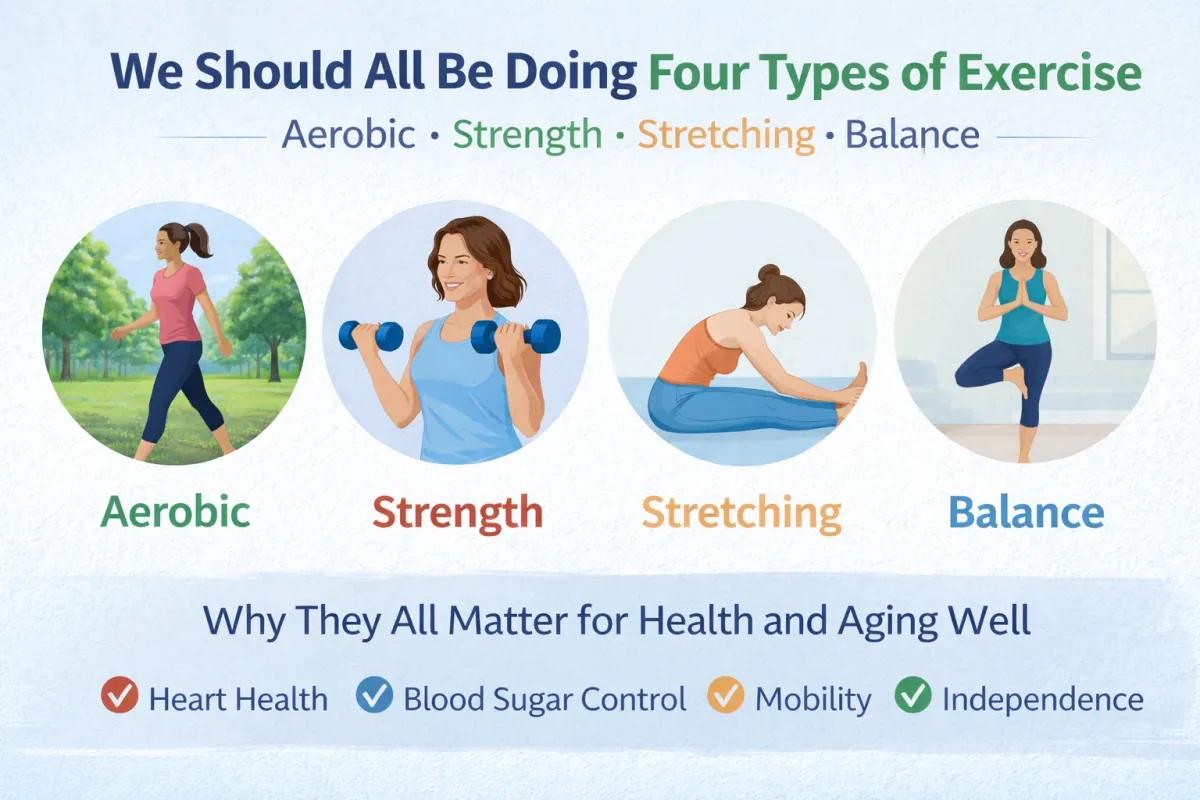
We Should All Be Doing Four Types of Exercise
We Should All Be Doing Four Types of Exercise
Exercise is one of the most powerful tools we have to protect our health, maintain mobility, and feel better as we age. But not all exercise works the same way. To get the most benefit, experts agree that we should include four different types of exercise in our weekly routine:
Aerobic exercise
Strength training
Stretching
Balance exercises
Each type supports the body in a different way. Together, they help improve heart health, muscle strength, flexibility, balance, and blood sugar control.
Many people focus on just one type of exercise—usually walking or cardio. While that’s a great start, a balanced routine gives better results and helps prevent injury. Always check with your healthcare provider before starting a new exercise program, especially if you have chronic conditions.
The Four Types of Exercise
1. Aerobic Exercise (Cardio)
Aerobic exercise increases your heart rate and breathing. It strengthens the heart and lungs and improves circulation. Examples include walking, swimming, biking, dancing, and jogging.
Benefits of aerobic exercise:
Lowers blood pressure
Improves cholesterol levels
Reduces inflammation
Helps control blood sugar
Improves mood and energy
Regular aerobic exercise lowers the risk of heart disease, stroke, type 2 diabetes, and some cancers.
Goal:
Aim for at least 150 minutes per week of moderate-intensity activity, such as brisk walking. You can break this into short sessions throughout the week.
For women over 40 with diabetes:
Aerobic exercise helps muscles use glucose for energy, which lowers blood sugar and improves insulin sensitivity. Low-impact options like walking and swimming are gentle on the joints and easy to maintain long term.
2. Strength Training
Strength training helps build and maintain muscle, which naturally declines with age. Muscle plays an important role in metabolism, balance, and blood sugar control. Strength training also helps protect bone health and reduce the risk of osteoporosis.
Benefits of strength training:
Builds muscle and strength
Improves posture and joint health
Supports bone density
Improves insulin sensitivity
Helps with weight management
Goal:
Strength train 2–3 times per week. This can include body-weight exercises (squats, wall push-ups), resistance bands, or weights.
For women over 40 with diabetes:
More muscle means better glucose uptake, which helps stabilize blood sugar. Strength training also improves functional strength for daily activities like lifting, carrying, and climbing stairs.
3. Stretching
Stretching helps keep muscles flexible and joints moving freely. As we age, muscles and connective tissues become tighter, which can lead to stiffness, pain, and injury.
Benefits of stretching:
Improves flexibility and range of motion
Reduces muscle stiffness and soreness
Helps prevent injuries
Supports better posture and movement
Goal:
Stretch most days of the week, especially after exercise. Hold each stretch gently for 20–60 seconds without bouncing.
For women over 40 with diabetes:
Stretching can help reduce stiffness related to high blood sugar, arthritis, or neuropathy and improve overall mobility.
4. Balance Exercises
Balance exercises help prevent falls by improving coordination and stability. Balance can decline with age due to changes in muscle strength, vision, and nerve function.
Benefits of balance exercises:
Improves stability and coordination
Reduces fall risk
Strengthens core and leg muscles
Builds confidence with movement
Goal:
Include balance exercises 2–3 times per week. Examples include standing on one foot, heel-to-toe walking, yoga, or tai chi.
For women over 40 with diabetes:
Balance training is especially important for those with neuropathy, as it improves safety and confidence with daily movement.
Why These Four Types Matter for Chronic Disease
For women managing diabetes, high blood pressure, or other chronic conditions, combining all four exercise types offers the best results:
Aerobic exercise improves heart health and lowers blood sugar
Strength training improves insulin sensitivity and protects bones
Stretching improves mobility and reduces pain
Balance exercises prevent falls and injuries
This well-rounded approach supports both short-term blood sugar control and long-term health.
Tips for Success
Start slow and build gradually
Choose activities you enjoy
Focus on consistency, not perfection
Stay hydrated and fuel your body well
Monitor blood sugar if you have diabetes
Rest when needed and listen to your body
Final Thoughts
You don’t need extreme workouts to be healthy. By combining aerobic, strength, stretching, and balance exercises, you support your heart, muscles, joints, and metabolism at every stage of life.
Small, consistent movement adds up. The goal is not to do everything perfectly—but to keep moving in ways that support your health, independence, and quality of life.
References
American College of Sports Medicine.Physical Activity Guidelines
https://www.acsm.orgCenters for Disease Control and Prevention (CDC).Physical Activity Basics
https://www.cdc.gov/physicalactivityAmerican Diabetes Association.Exercise and Diabetes
https://diabetes.orgNational Institute on Aging.Exercise and Physical Activity
https://www.nia.nih.gov
