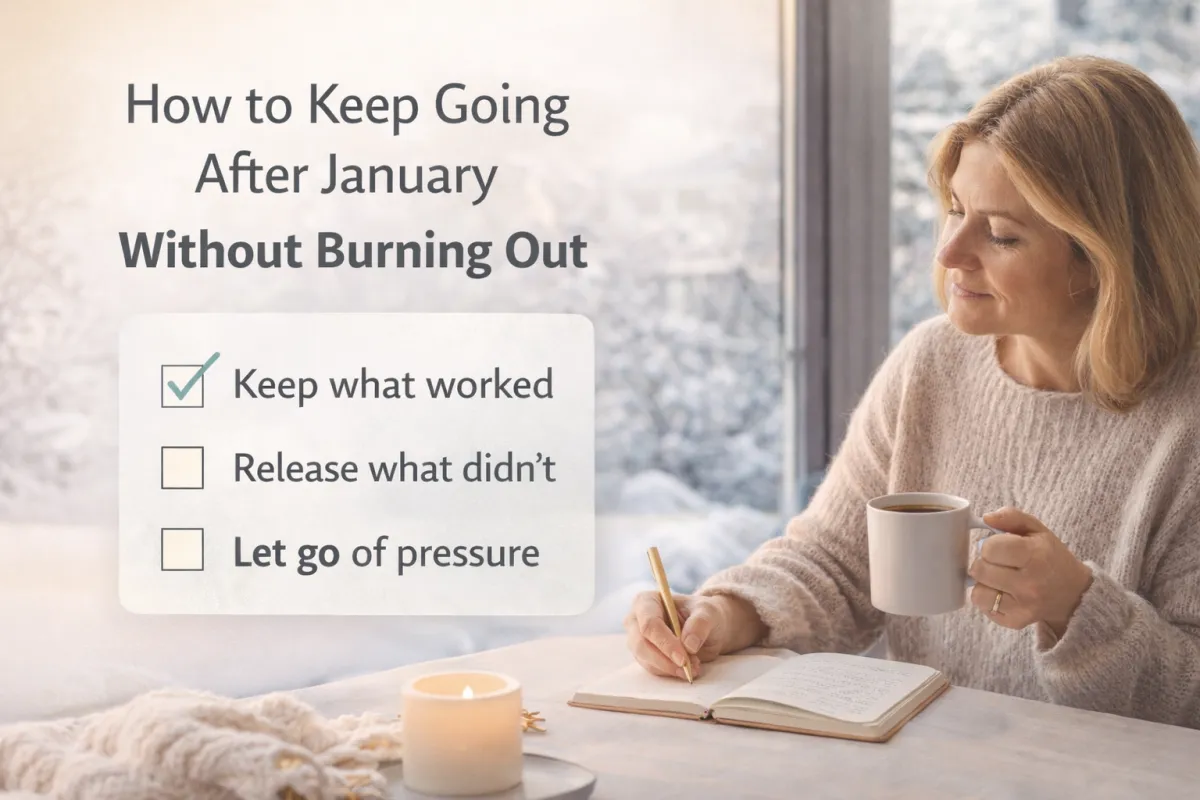
How to Keep Going After January Without Burning Out
How to Keep Going After January Without Burning Out

By the fourth week of January, many people feel one of two things:
pressure to do more
or the urge to quit altogether
This is the point where motivation often fades—not because you failed, but because January expectations are usually unrealistic.
The truth is, health doesn’t improve because January happened.
It improves when what you start in January is still happening in February.
Why January Plans Often Fall Apart
Most January health plans fail for predictable reasons:
too many goals at once
overly strict rules
relying on motivation instead of structure
no plan for real life (stress, work, family, energy)
When the plan doesn’t fit your life, consistency becomes impossible.
That’s not a willpower problem.
That’s a design problem.
A Better Way to Think About Progress
Instead of asking:
“Am I doing this perfectly?”
Ask:
“What am I actually willing to keep doing?”
Sustainable progress comes from:
habits that feel realistic
routines that reduce decision fatigue
goals that fit your current season of life
You don’t need more discipline.
You need fewer expectations—and better support.
What to Carry Forward From January
As January ends, take a moment to reflect.
Ask yourself:
What worked this month?
What felt doable?
What improved my energy or blood sugar—even a little?
What felt heavy or forced?
The goal is not to carry everything forward.
The goal is to keep what worked and release what didn’t.
Even one or two supportive habits are enough.
Consistency Beats Motivation
Motivation comes and goes.
Consistency comes from systems.
Helpful systems might include:
eating regular meals instead of “perfect” meals
walking after meals instead of long workouts
choosing sleep over pushing through exhaustion
planning for busy days instead of expecting ideal ones
These systems reduce stress—and lower stress supports blood sugar.
Why This Matters for Blood Sugar
Blood sugar stability improves when:
routines are predictable
stress is lower
sleep is supported
expectations are realistic
This is why “starting over” every few weeks often backfires.
Your body responds better to steady signals, not constant resets.
A Gentle Focus for the End of January
Instead of setting new goals, try this:
👉 Choose one habit from January you’re willing to keep doing in February.
👉 Let the rest go—for now.
Progress doesn’t come from doing more.
It comes from doing what works—more often.
The Takeaway
January doesn’t need a dramatic finish.
It needs a thoughtful transition.
When you move forward with clarity instead of pressure, health becomes something you build—not something you chase.
Did You Know?
💡 Repeating small habits consistently has a greater long-term impact on blood sugar control than short-term intensive changes.
